Last Thanksgiving, I wasn’t at work and I wasn’t at anyone’s table.
I was in quarantine.
MRSA had made its unwelcome return just days before, and doctor’s orders were simple: stay home, stay away.
Normally, I have a system for getting through the holidays without sinking: I head to the VFW early for Thanksgiving dinner, scan the room for an older vet sitting alone, and sit down with him. We trade stories. We talk about things most people rush past. For a few hours, the day becomes less about “performing” a holiday and more about honoring survival.
This year, that tradition didn’t happen.
The house was low on food. Friends mentioned they could bring me a plate—and I appreciated that—but something in me tightened at the thought of actually asking. To receive, I would have to reach out. Admit need. Name the situation.
That felt heavier than the infection.
So I stayed in the quiet.
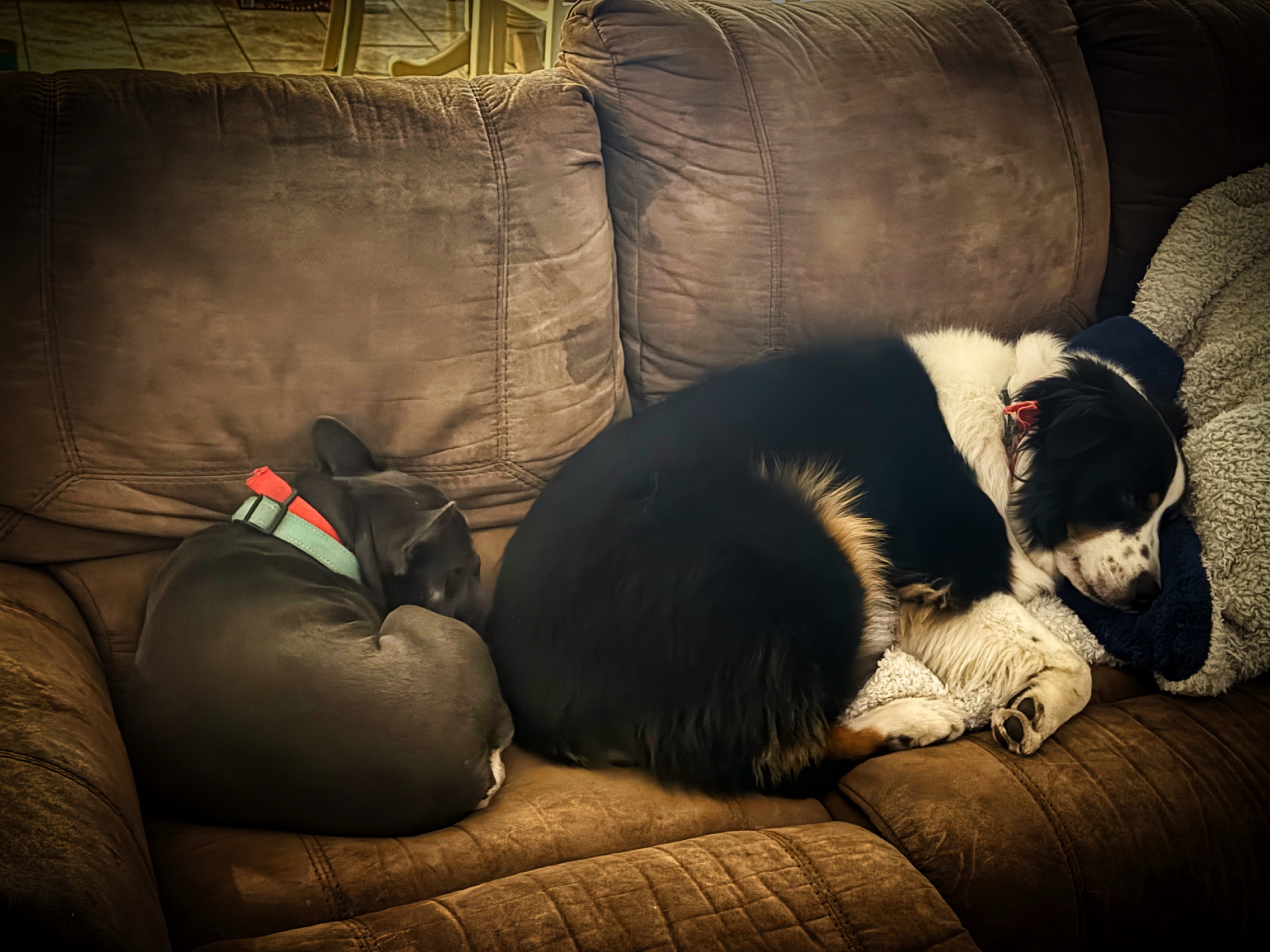
It was me, the walls, and two four-legged constants: my dogs, Rio and Nodens.
I made sure their bowls got their favorite “gravy” and watched them eat like it was the greatest feast on earth. That tiny ritual was an anchor: if I couldn’t give myself much that day, I could still give them something they loved.
On paper, it was nothing.
Inside, it was one of the loneliest holidays I’ve had.
When Distance Becomes a Weapon
That Thanksgiving wasn’t a one-off. It exposed a pattern I’ve carried for years.
One year, I had the chance to spend the holiday with Chelsea’s family. They opened their doors and their table, and I did what a lot of men do when we’re hurting and don’t know how to say it:
I acted “too busy.”
I used work, tasks, and “I’ve got a lot going on” as a shield. The truth was simpler and more painful: I wanted help. I just didn’t know how to ask without feeling weak or exposed.
So I weaponized distance.
I withheld my presence from the very moment I actually wanted. Looking back now, I would give a lot for another opportunity like that. Today, the sentence I wish I had said is brutally simple:
“I’m not actually too busy. I’m overwhelmed and I’d love to be with you.”
At the time, I didn’t have that sentence. I had a mask instead.
The Data Is Catching Up to What Men Already Know
Here’s the part that matters if you’re reading this and seeing yourself in it:
This isn’t just my story. It’s a lot of men’s story.
A new AARP survey of adults 45+ found that 40% are classified as lonely, and for the first time, men report higher loneliness than women—42% of men vs 37% of women.
The U.S. Surgeon General has gone so far as to call loneliness and isolation a public health crisis, linking disconnection to higher risks of depression, heart disease, stroke, and premature death.
And the holiday season amplifies all of this. Pressure, financial strain, complicated family dynamics, and grief all tend to spike in November and December, making existing loneliness feel sharper and more exposed.
If the holidays hit you harder than they “should,” you are not broken.
You’re a man in a culture that trained you to carry too much and say too little.
The MMM Lens: Mountains, Monsters & Mercy
In the work I’m doing around MMM—Mountains, Monsters & Mercy—I use this frame to make sense of moments like that Thanksgiving.
The Mountain is the visible load. MRSA quarantine. An empty-ish pantry. No VFW table. No normal routine. The expectation that you’ll handle it. The Monster is the rule underneath. The old script that says: “Don’t ask. Don’t need. Don’t inconvenience anyone. Handle it alone.” It’s the same script that turned a chance with Chelsea’s family into a performance of being “too busy.” The Mercy is the practice that breaks the script. It’s never abstract. It lives in small, concrete moves: letting someone bring you a plate without earning it sending the text you’re afraid makes you look needy saying, “I’d actually like to be there,” instead of hiding behind work
That Thanksgiving, my “mercy” was small: feeding Rio and Nodens their favorite gravy, acknowledging that companionship matters to me, even if it’s on four legs. It wasn’t heroic, but it stopped the day from being pure self-punishment.
Self-mastery rarely starts with a grand gesture. It usually starts with something that looks almost embarrassingly small from the outside.
Holiday Loneliness, Seasonal Darkness, and Your Nervous System
There’s also a physical side to this.
Shorter days and longer nights aren’t just an aesthetic. The National Institute of Mental Health notes that Seasonal Affective Disorder (SAD) is a form of depression that follows a seasonal pattern, often starting in late fall and easing in spring. Symptoms can include low mood, low energy, sleep changes, and pulling away from others.
Research and clinical guidelines point to a few simple levers that can help many people manage winter mood, loneliness, and energy:
exposure to bright light, especially within the first hours of waking consistent sleep and wake times regular movement, preferably with another human involved
In plain terms:
You’re not just fighting feelings. You’re fighting biology and environment. That doesn’t make you doomed. It just means you need a plan, not shame.
From Isolation to Action: Practical “Mercy Moves” for Men
Here are a few practical, non-theoretical moves if you see yourself in this:
1. Name one honest sentence
Not the whole story. Just the next truth.
Examples:
“This season is hitting me harder than usual.” “I’ve been more isolated than I want to admit.” “I don’t need you to fix it, I just don’t want to carry it alone.”
Say it to a friend, a partner, a counselor, or even write it out first. This is how you stop using busyness as a weapon and start using words as a bridge.
2. Let someone bring you a plate
If someone offers support—food, a seat at the table, a ride, a call—treat that offer as real, not polite.
Your only job:
Say “Yes, thank you,” and then actually receive it.
That one move rewrites the rule that you have to justify your existence by never needing anything.
3. Choose one “third place” for the season
Pick a spot that isn’t home or work where you can show up regularly:
VFW gym or run club faith community men’s group volunteer team
Don’t go to impress anyone. Go to interrupt isolation.
4. Give yourself a “dog-level” ritual
The way I made sure Rio and Nodens got their gravy, give yourself a simple, tangible ritual that marks the day as worth something:
a proper meal on a plate, not just snacking a walk around the block once it gets dark a short journal entry about one thing you handled today
It’s not about pretending everything is okay. It’s about refusing to agree with the lie that you don’t matter.
5. Stop weaponizing your absence
If you catch yourself pulling away to prove a point—to punish, to protect, to be “strong”—pause and ask:
“What is the sentence I actually need to say instead of disappearing?”
It might be:
“I’m hurt and I don’t know how to say it.” “I really do want to be included; I just feel awkward.” “I’m not okay, but I want to be with you anyway.”
That’s the kind of emotional strength men rarely get modeled, but desperately need.
If Your Thoughts Are Getting Dark
If you’re at a point where the loneliness is turning into thoughts of self-harm or you feel like you might not be safe with yourself, please get immediate support.
In the U.S., you can call or text 988 to reach the Suicide & Crisis Lifeline. If you’re outside the U.S., look up your local crisis line or use your country’s emergency number.
Needing help is not a moral failure. It’s a human reality.
The Invitation
Last Thanksgiving forced me to look at myself without the usual noise: no VFW table, no crowded room, no “I’m too busy” script.
I saw how quick I am to turn down the very connection I crave.
I saw how easily I weaponize my silence.
I saw how much mercy I’ll extend to a dog’s food bowl before I extend any to my own heart.
If any of that sounds familiar, here’s the invitation:
This holiday season, pick one mercy move and do it badly.
Say the awkward sentence. Accept the plate. Show up to the thing.
Self-mastery doesn’t mean you never feel lonely. It means you don’t let loneliness drive the car.